The chair of Elastomer Technology and Engineering (ETE) is part of the department of Mechanics of Solid, Surfaces and Systems (MS3) at the University of Twente in the Netherlands.
The ETE research focuses on rubber material development with an emphasis on filler and tire tread technology, silica/silane filled natural rubber compounds, recycling and sustainability. One of the strengths of ETE is the wide cooperation with industrial partners, universities and research institutes all over the world.
With its experience, broad network and knowledge, the ETE group is established as one of the biggest rubber research groups worldwide.
One of the key research topics is tire compound development and optimization.
Rubber compound development process
The development process starts with the careful selection of raw materials, including:
- Polymers (natural rubber, synthetic rubbers)
- Fillers (carbon black, silica for reinforcement and abrasion resistance)
- Plasticizers and oils (to adjust flexibility and processability)
- Curing agents (sulfur and accelerators for vulcanization)
The next step is compound formulation, where ingredients are combined in specific ratios to achieve targeted performance properties. Mixing is a critical stage in rubber processing, as it ensures uniform dispersion of fillers and additives within the polymer matrix.
The two primary industrial mixing methods are:
- Open two-roll mill mixing
- Internal mixing using equipment such as a Banbury mixer
The final step is vulcanization, where rubber molecules are crosslinked under elevated temperature and pressure. This process significantly alters the physical and chemical structure of the compound, improving durability, mechanical stability, and overall performance.
Laboratory press for sample preparation
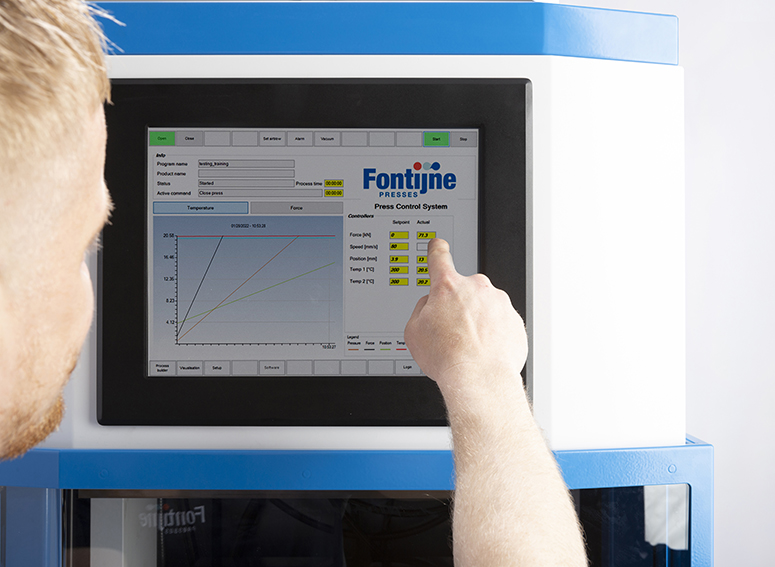
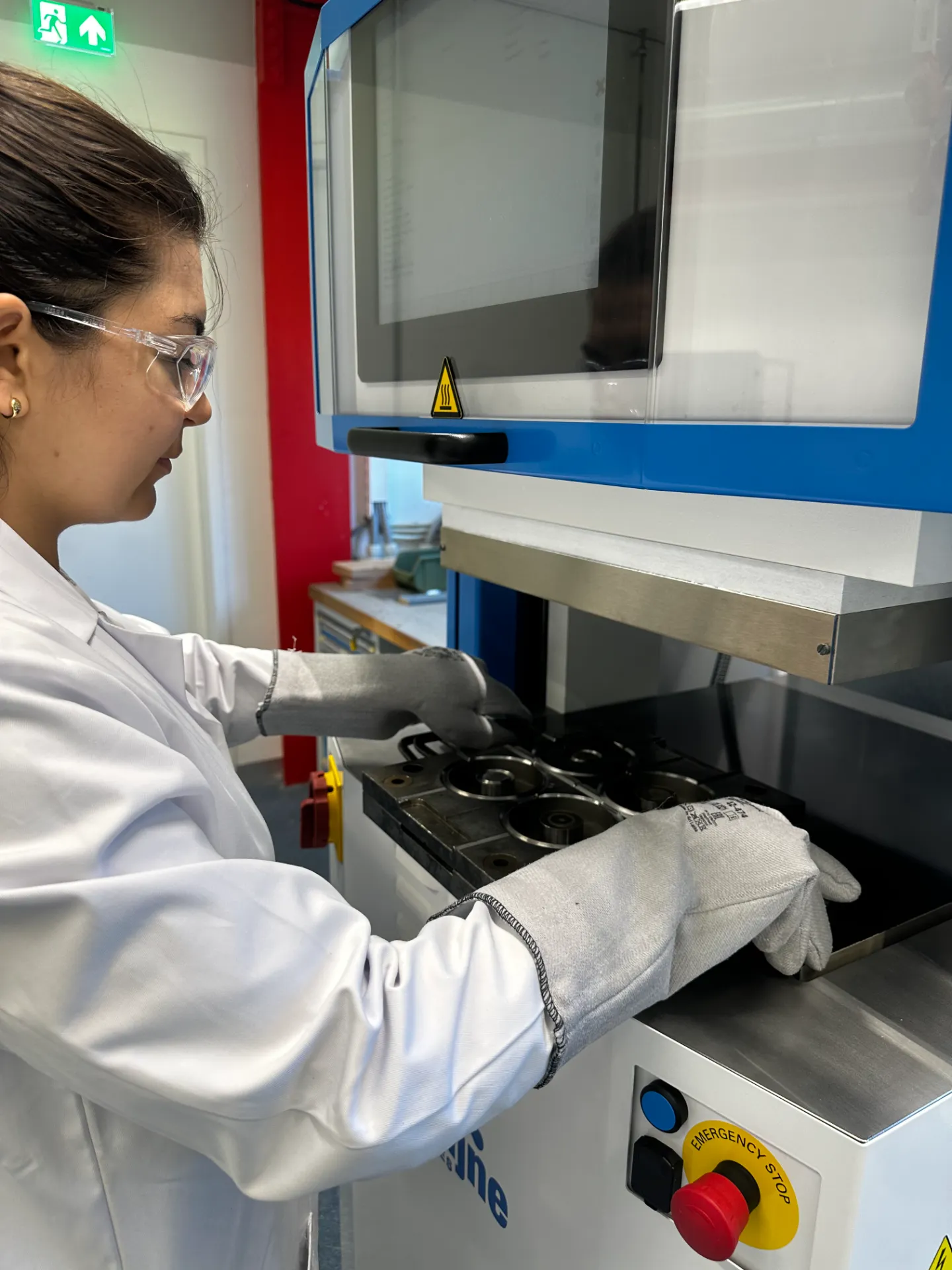
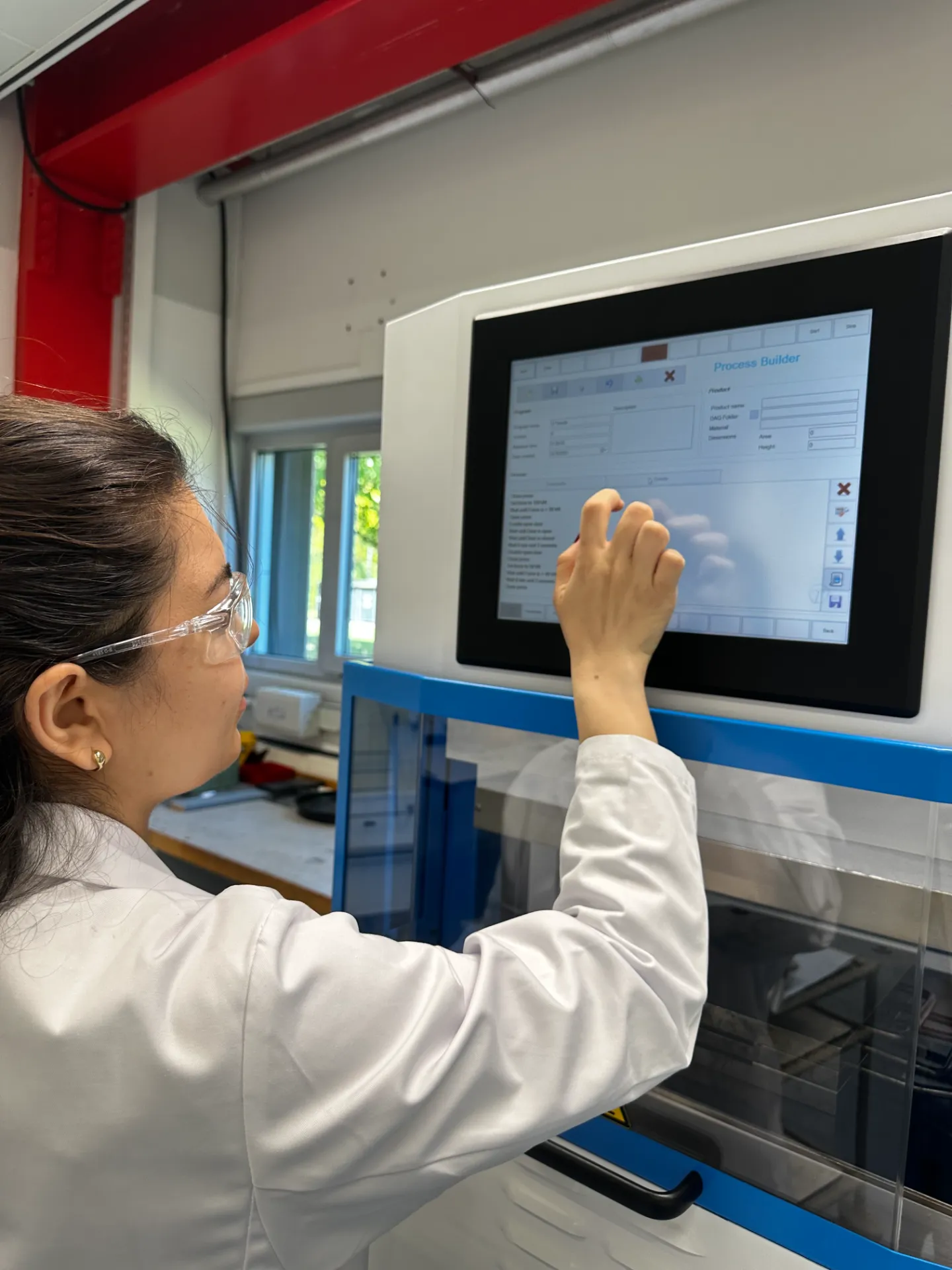
To support its research activities, ETE invested in a Fontijne Presses laboratory platen press, known for its high quality, excellent performance, compact design, low energy consumption, and user-friendly interface.
The Fontijne Presses LabEcon 1000 ProView enables high-performance laboratory curing within a compact footprint. Key specifications include:
- Integrated hydraulic unit
- Maximum closing force: 1000 kN
- Two electrically heated steel platens (500 × 500 mm)
- Maximum temperature: 300°C
- One daylight opening: 200mm
Preparation of LAT100 samples
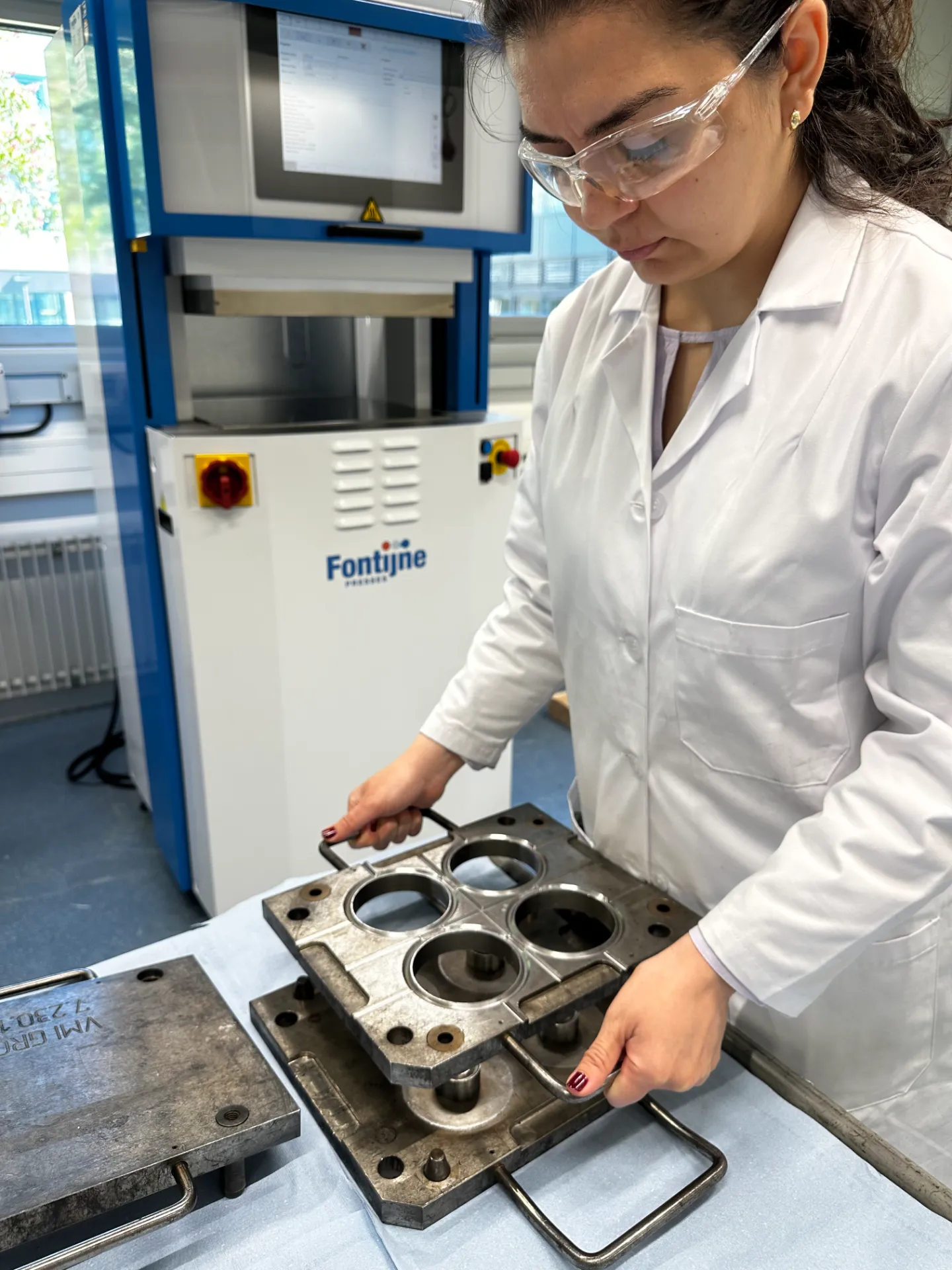
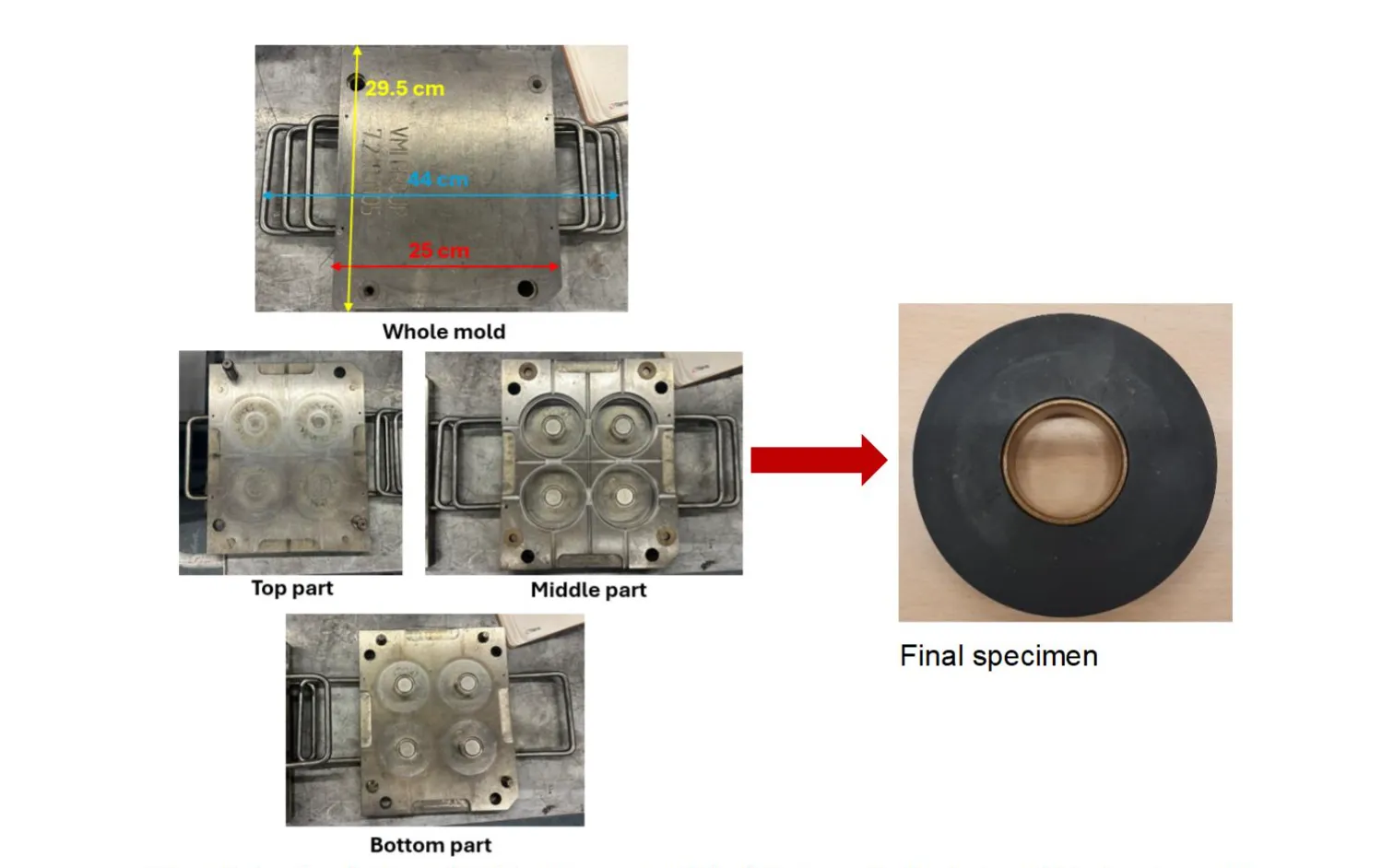
One of the standard applications of the hot press at ETE is the preparation of samples for LAT100 (Laboratory Abrasion Tester 100) testing. For this purpose, a dedicated LAT100 mold is used to produce test wheels with precise geometry and surface quality.
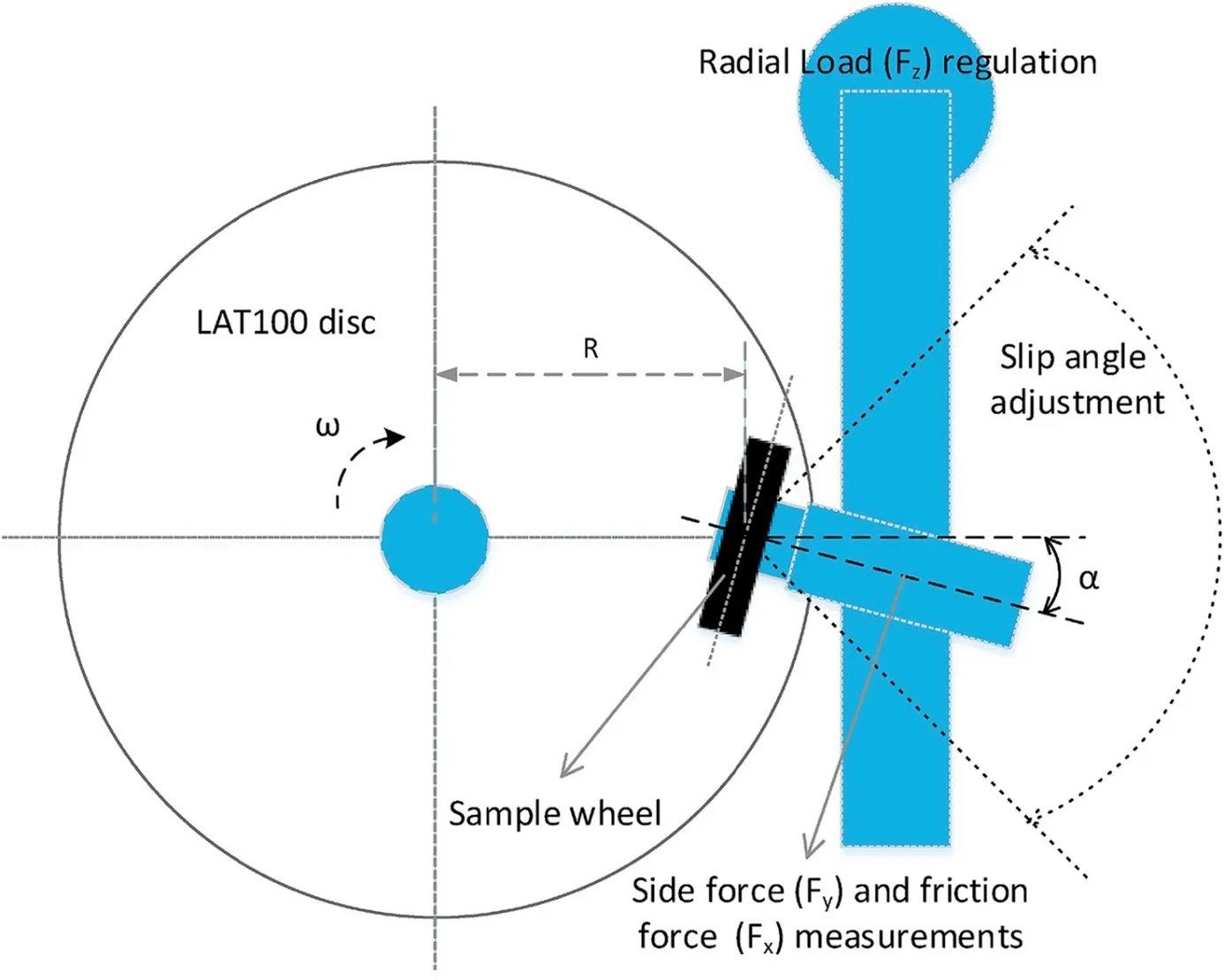
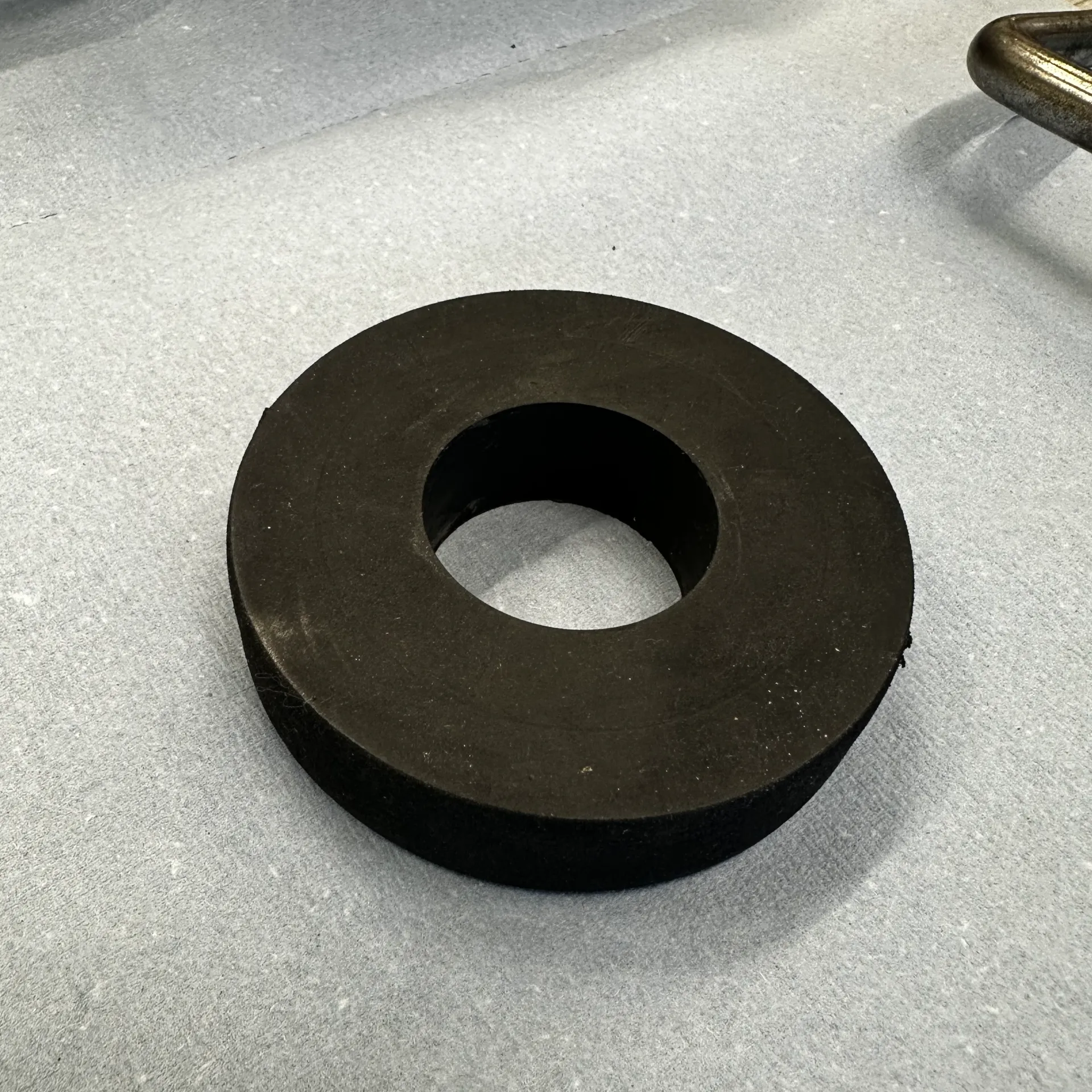
The LAT100 test is a standardized laboratory method used to evaluate the performance of tire tread compounds under simulated road conditions. It allows early-stage prediction of key properties such as:
- Friction performance
- Wear resistance
- Heat build-up
The LAT100 system uses a rotating disk and a rubber test wheel under controlled parameters such as speed, load, slip angle, and surface texture to simulate tire–road interaction. This enables the prediction of grip, cornering behavior, and overall compound performance before manufacturing full-scale tire prototypes.
ISO 23233 is the International Standard that outlines the method for determining the abrasion resistance of rubber using a driven vertical abrasive disc. Abrasion related mass loss is measured by inducing slip through various slip angles and rotational speeds between a wheel shaped rubber specimen and an abrasive disc.
These components rotate in perpendicular planes and are pressed together under a specified load. The test results may be expressed as the mass loss per unit of running distance and/or as an abrasion resistance index relative to a reference compound.
Test pieces are moulded in accordance with ISO 23529 and ISO 2393.
The collaboration between Fontijne Presses and the Elastomer Technology and Engineering group demonstrates how precise laboratory equipment and advanced rubber research expertise come together to drive innovation in tire compound development.
All of the described tests are available in the ETE group.
More info?
Need expert advice on selecting the best laboratory press for your needs? Contact our specialists today!