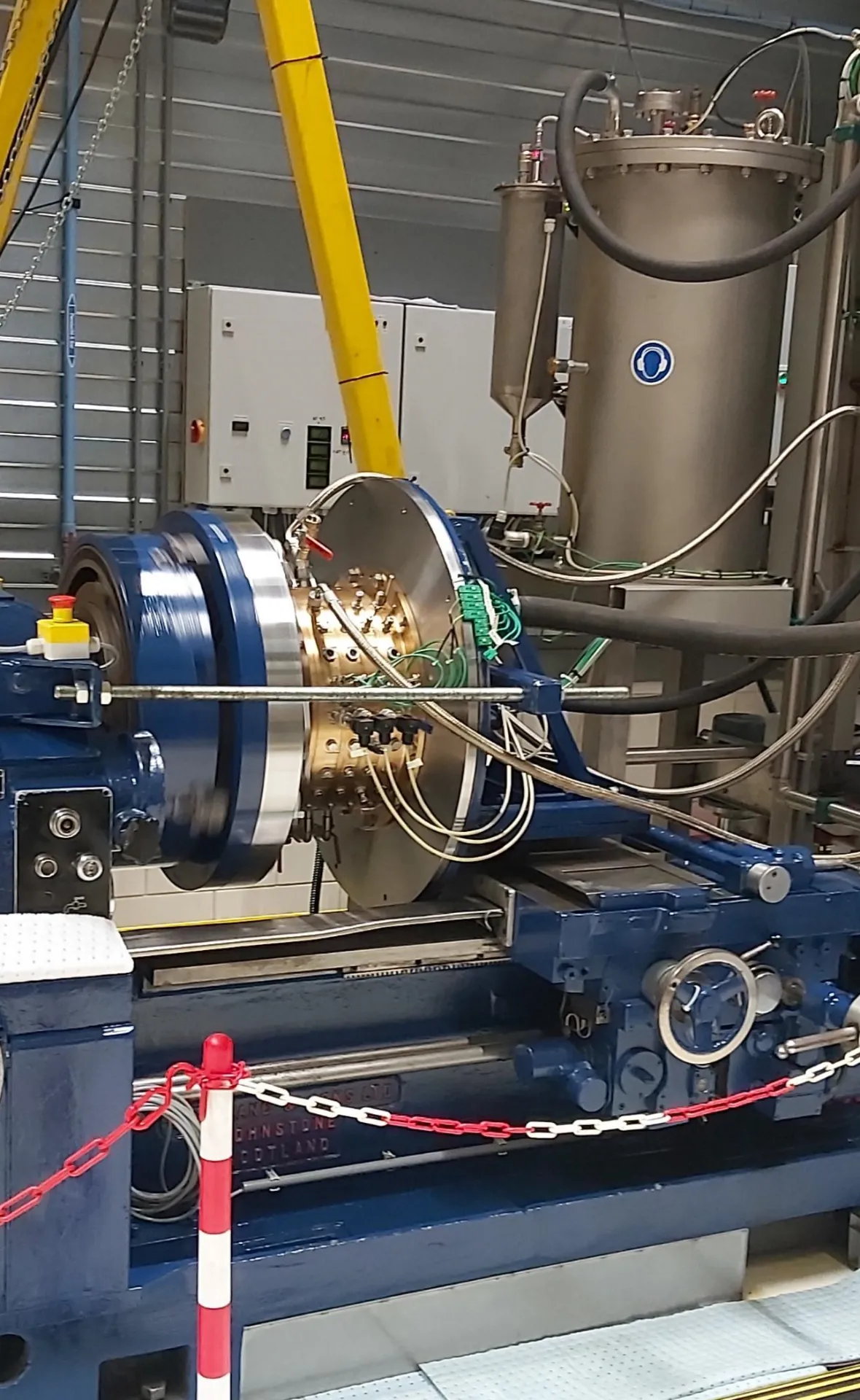
AEGIR-Marine, an OEM-independent manufacturer and global service provider of stern seals and propulsion-related components, continuously invests in innovation to improve the reliability and performance of its sealing solutions.
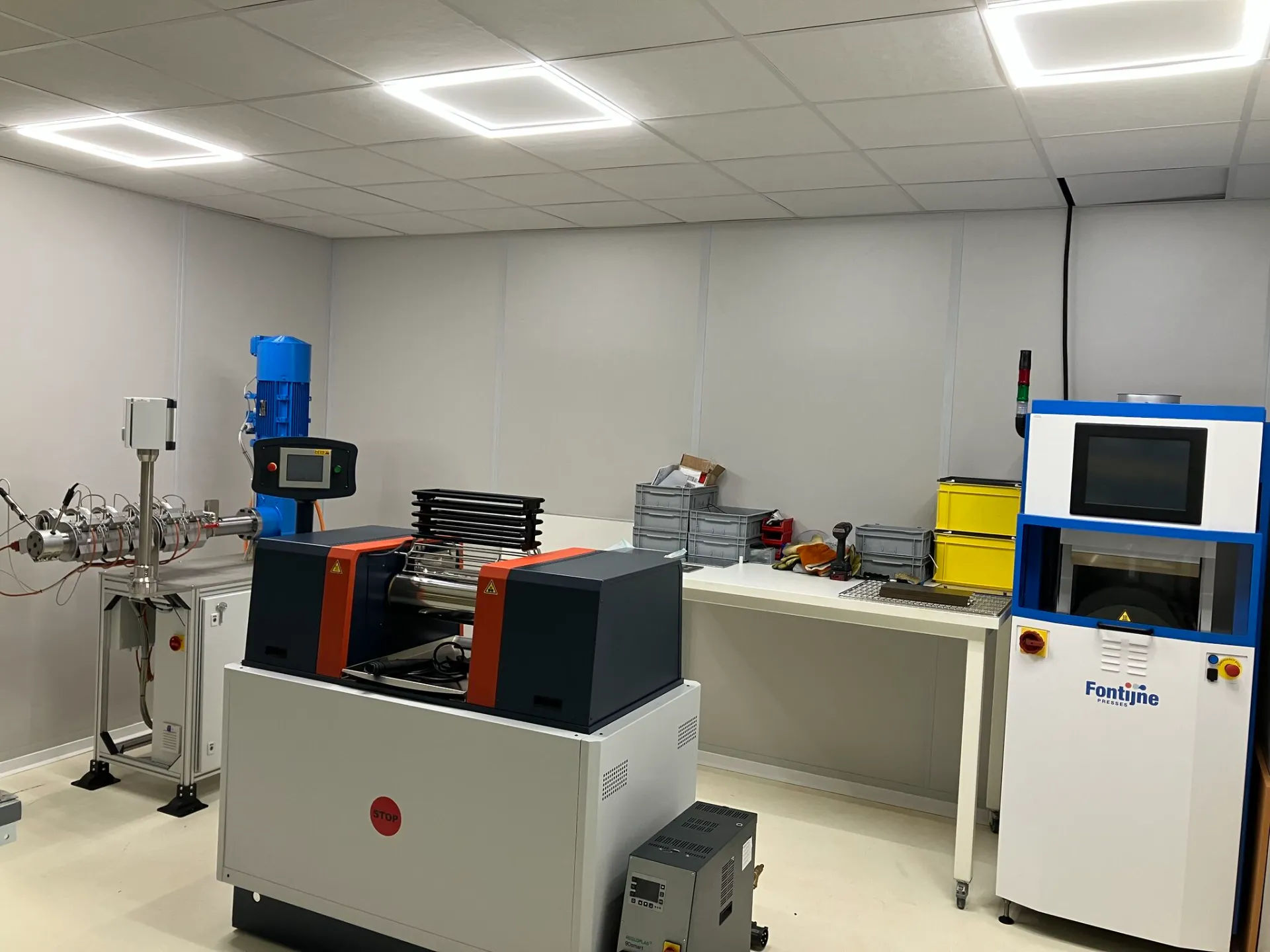
To strengthen its research and development capabilities, AEGIR-Marine established a dedicated R&D rubber laboratory, enabling the company to mix rubber compounds and produce small-scale seals entirely in-house.
Building an in-house rubber development lab
The new lab – internally referred to as the “seal bakery” – allows engineers to accelerate development and validation processes. Custom-made seals produced in the lab are used for internal testing across a wide range of lubricants, materials, and operational conditions, helping the team fine-tune performance and innovate faster.
The laboratory is equipped with:
- A two-roll mill for rubber compounding
- An extruder for material preparation
- A Fontijne Presses LabEcon 600 laboratory press for controlled sample production
Together, this equipment allows AEGIR-Marine to produce representative test samples while maintaining full control over the material development process.
Producing rubber test samples for material testing
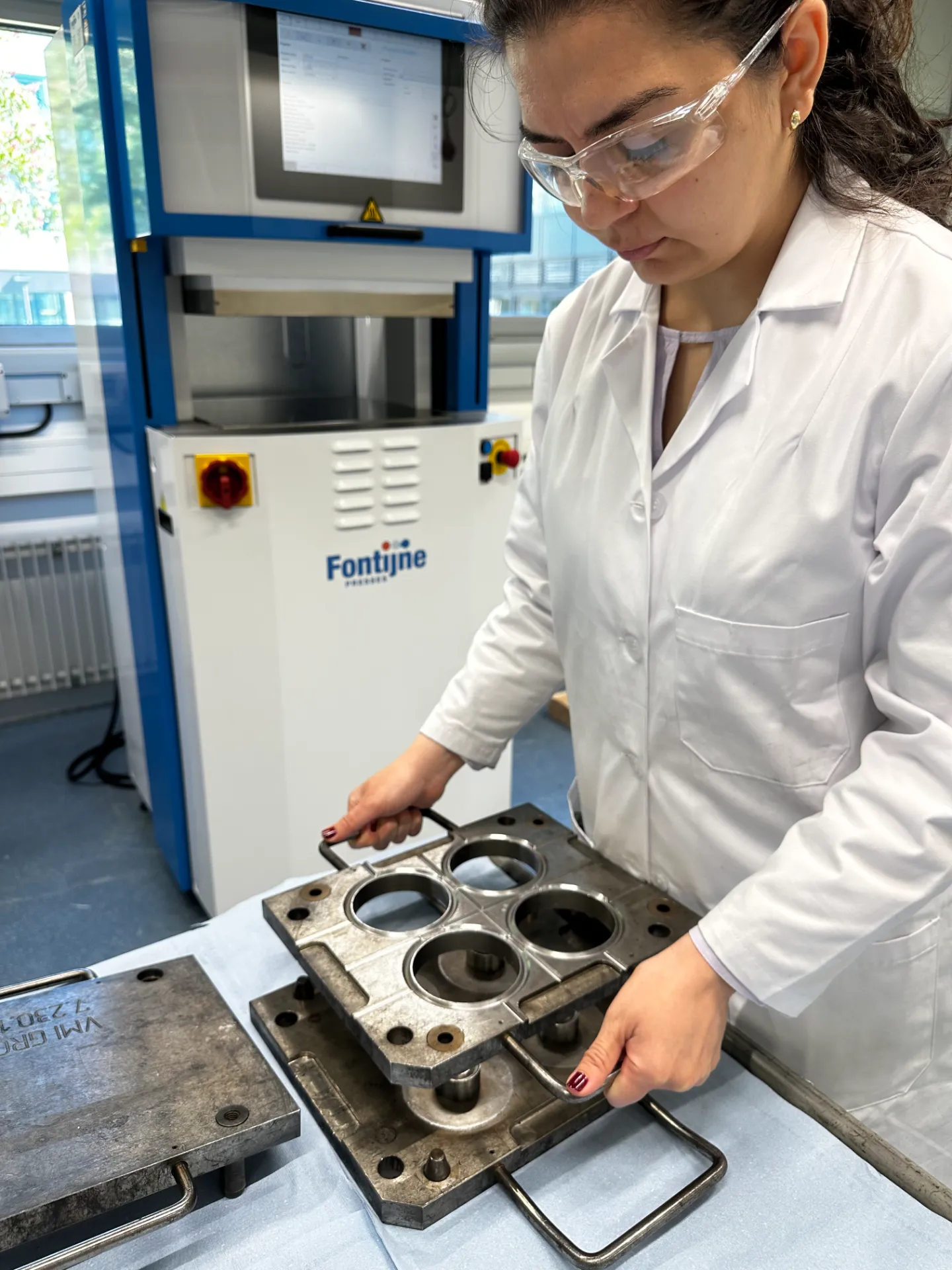
Using the Fontijne Presses laboratory press, the team produces a range of rubber test specimens, including:
- Rubber slabs for mechanical and physical testing
- Discs and buttons for hardness measurements
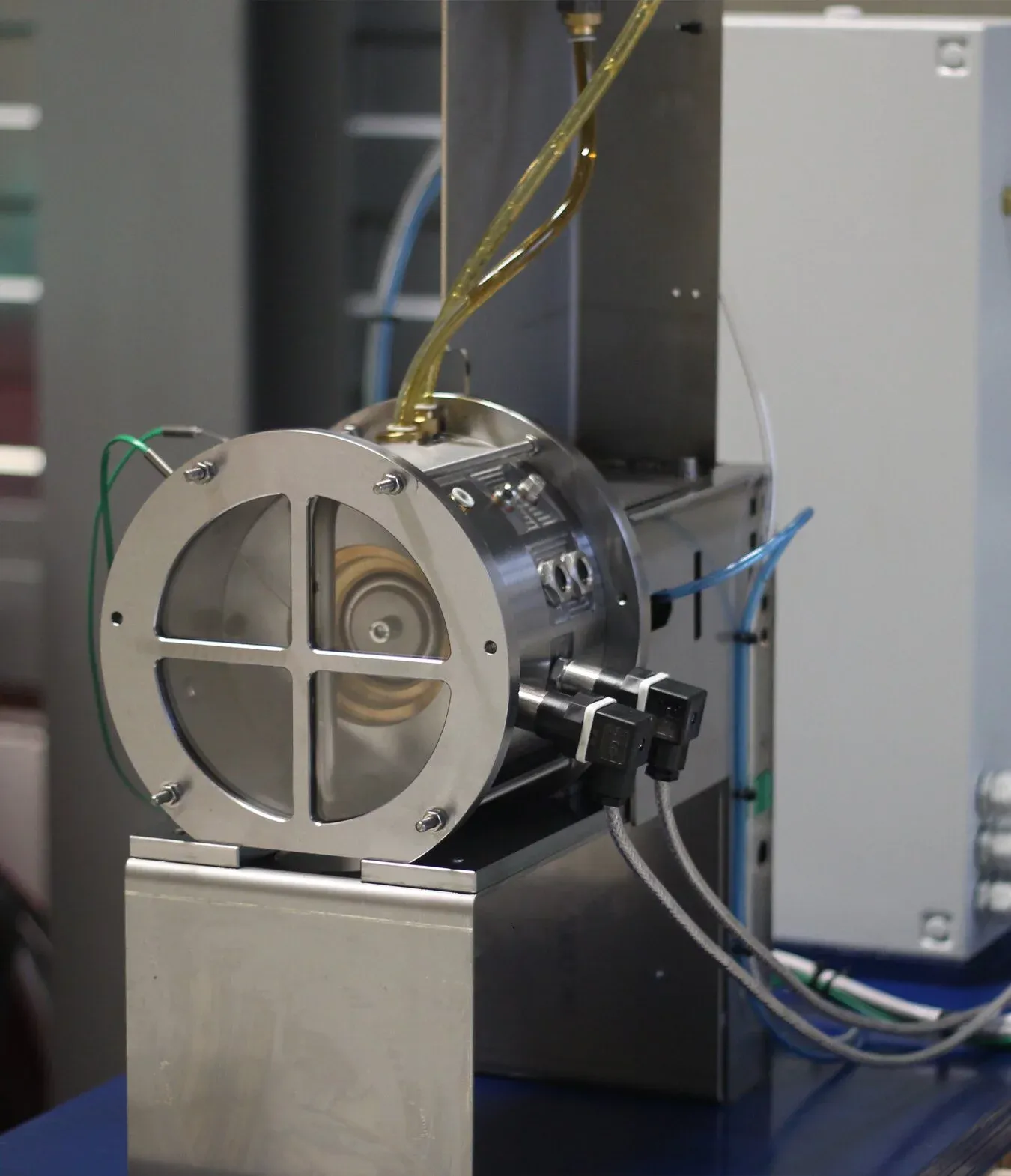
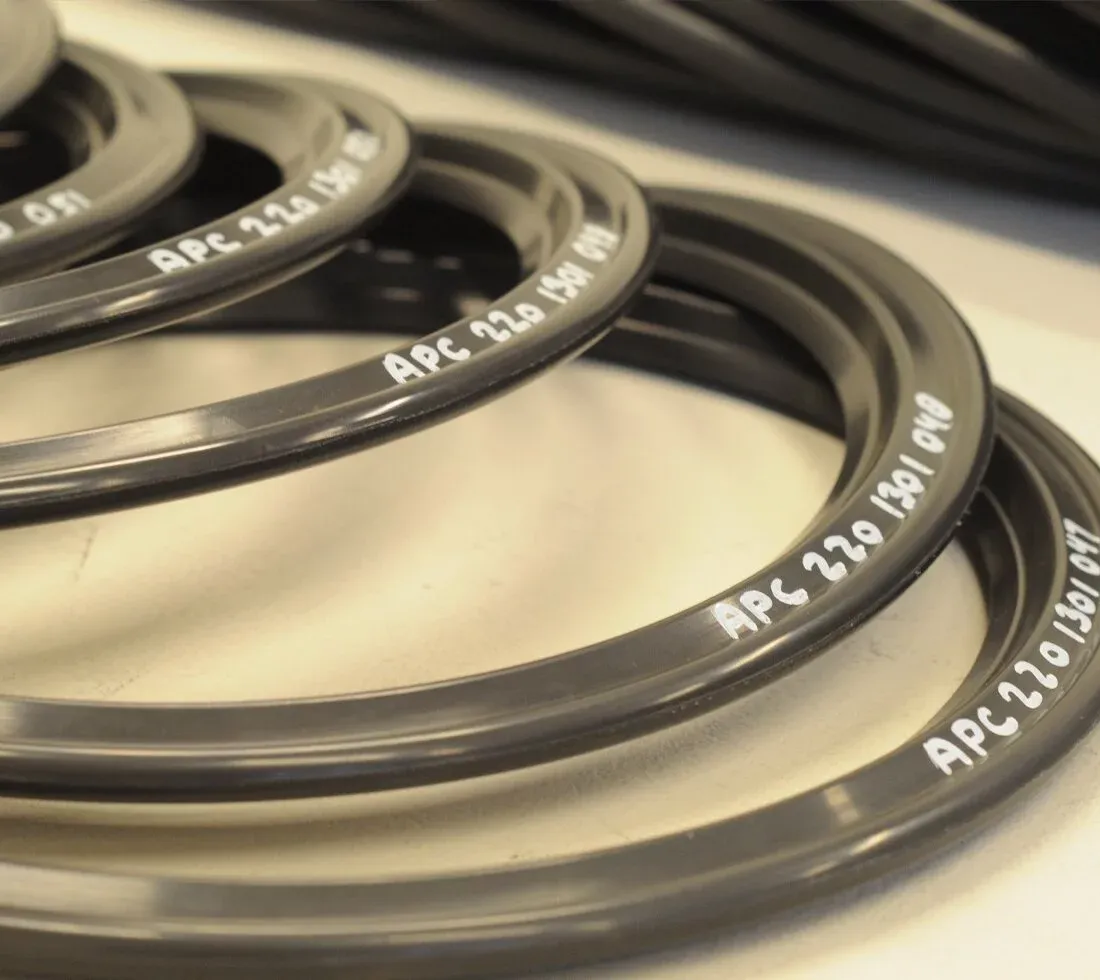
- Small-scale sealing rings for dynamic sealing performance tests
These samples are evaluated using internationally recognized testing standards such as:
- ISO 815-1-B – Compression set testing
- ASTM D2240 – Rubber hardness measurement
- ASTM D412 – Tensile strength and elongation
- ISO 2781-A – Density determination

Working according to these standards ensures that test results are reliable, repeatable, and comparable across development projects.
The standard ASTM D3182 specifies the vulcanization equipment and procedures, including curing presses, used to produce the standard vulcanized sheets.
Read here more about how you, depending on the sample material and the tests you want to perform, might need to follow specific guidelines: https://www.fontijnepresses.com/blog/why-laboratory-platen-presses-are-essential-for-reliable-sample-preparation/
The role of the Fontijne Presses laboratory press
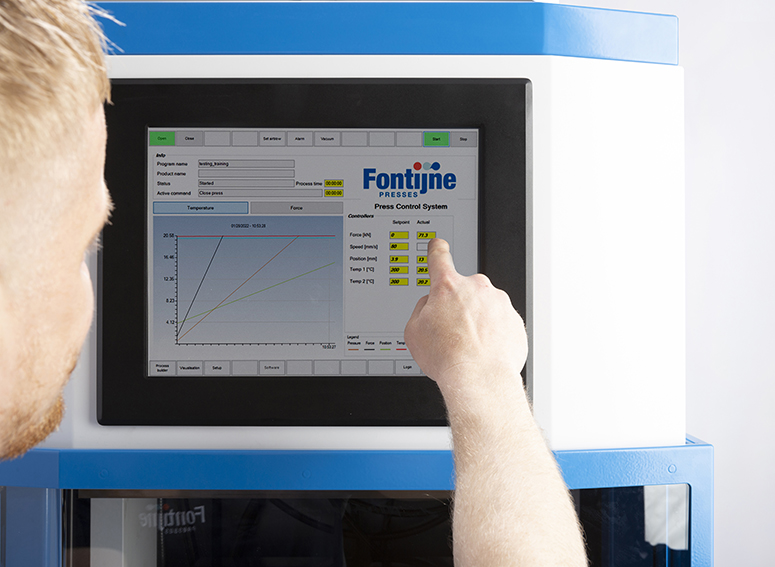
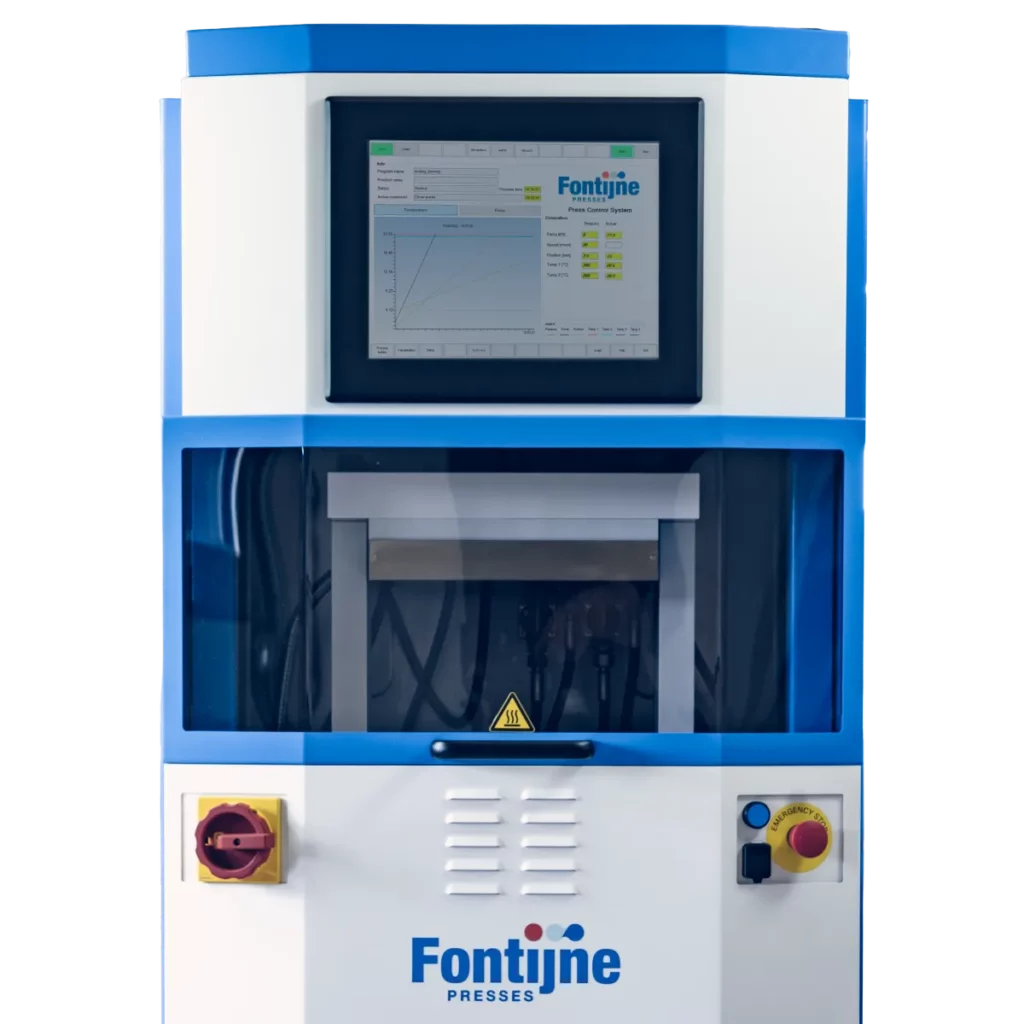
Precise control over pressure, temperature, and pressing time is essential when preparing rubber test samples. The Fontijne Presses LabEcon laboratory press allows AEGIR-Marine to produce samples under accurately defined pressing conditions, ensuring high reproducibility and consistent testing results.
The press enables engineers to program and store multiple pressing cycles, making it especially suitable for flexible R&D environments where different rubber compounds and processing parameters must be evaluated.
According to the R&D Team at AEGIR-Marine:
“The Fontijne Presses lab press is very user-friendly and easy to operate. The ability to program every step of the pressing process and store multiple programs makes it especially useful in our R&D rubber compounding work, where flexibility and repeatability are essential.”
Faster development and deeper material insight
By integrating compounding, extrusion, and controlled pressing within one laboratory environment, AEGIR-Marine can rapidly develop and test new rubber formulations and sealing concepts.
The improved control over sample preparation has increased the consistency of test results and accelerated development cycles. Ultimately, the new rubber R&D lab enables AEGIR-Marine to better understand material behavior and deliver highly reliable sealing solutions for demanding maritime applications.
Looking for the right solution?
Tell us what you need, and we’ll help you make it happen.