Force, temperature and time determine important conditions within a pressing cycle. But for some materials and moulding processes, the movement between these conditions is equally important.
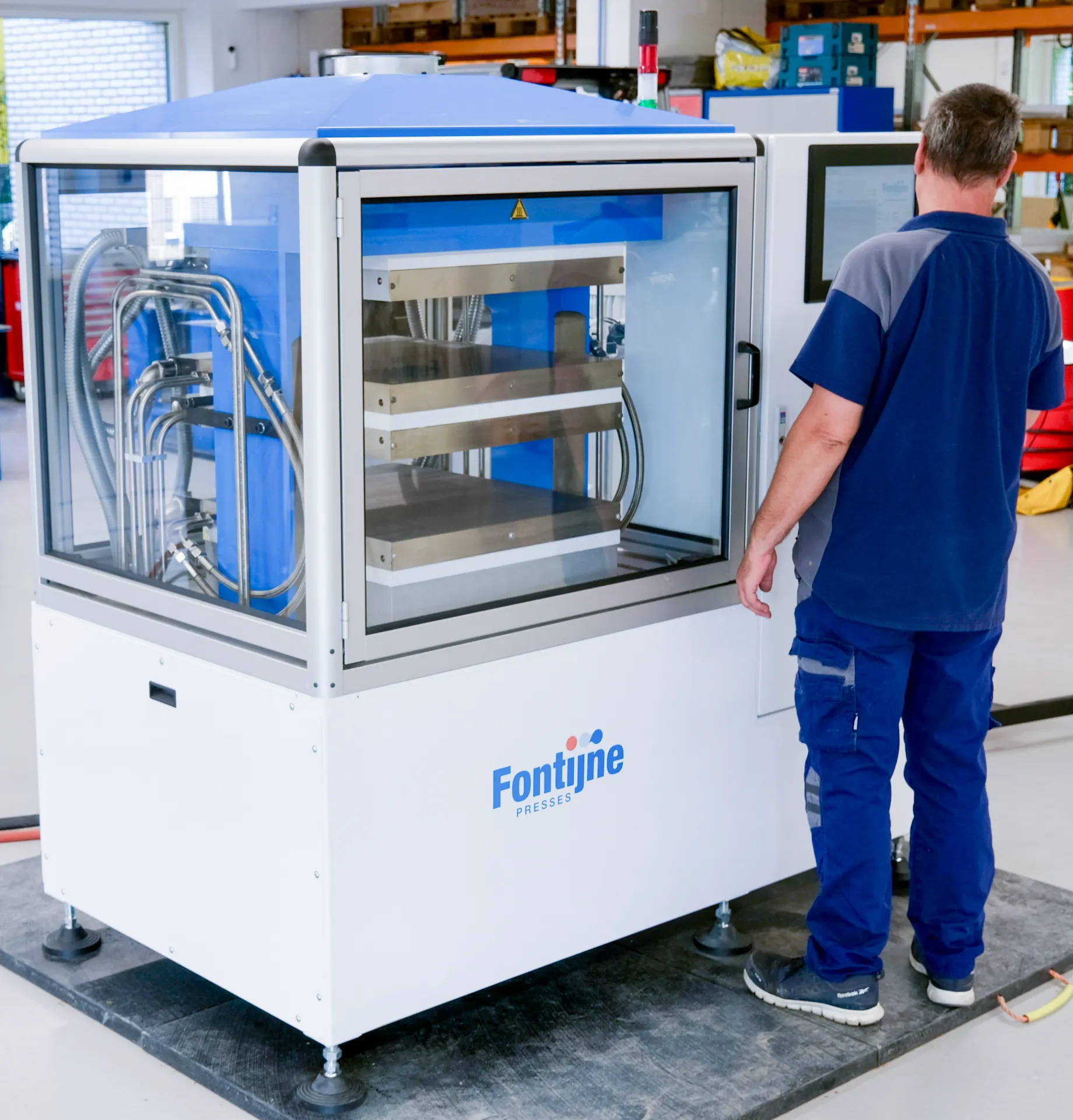
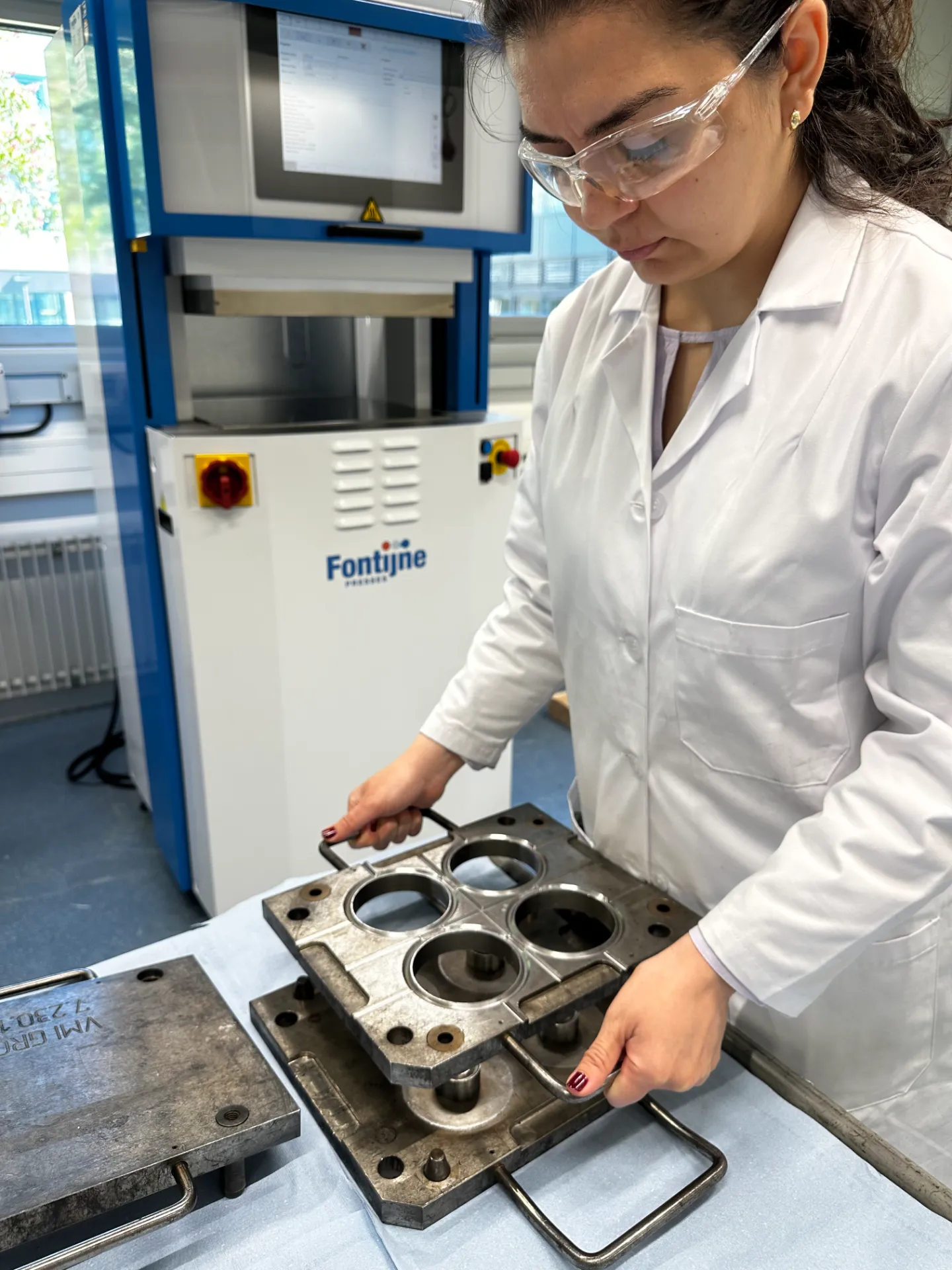
Fontijne Presses can now integrate precise position control into the LabEcon, LabPro and LabVac laboratory presses.
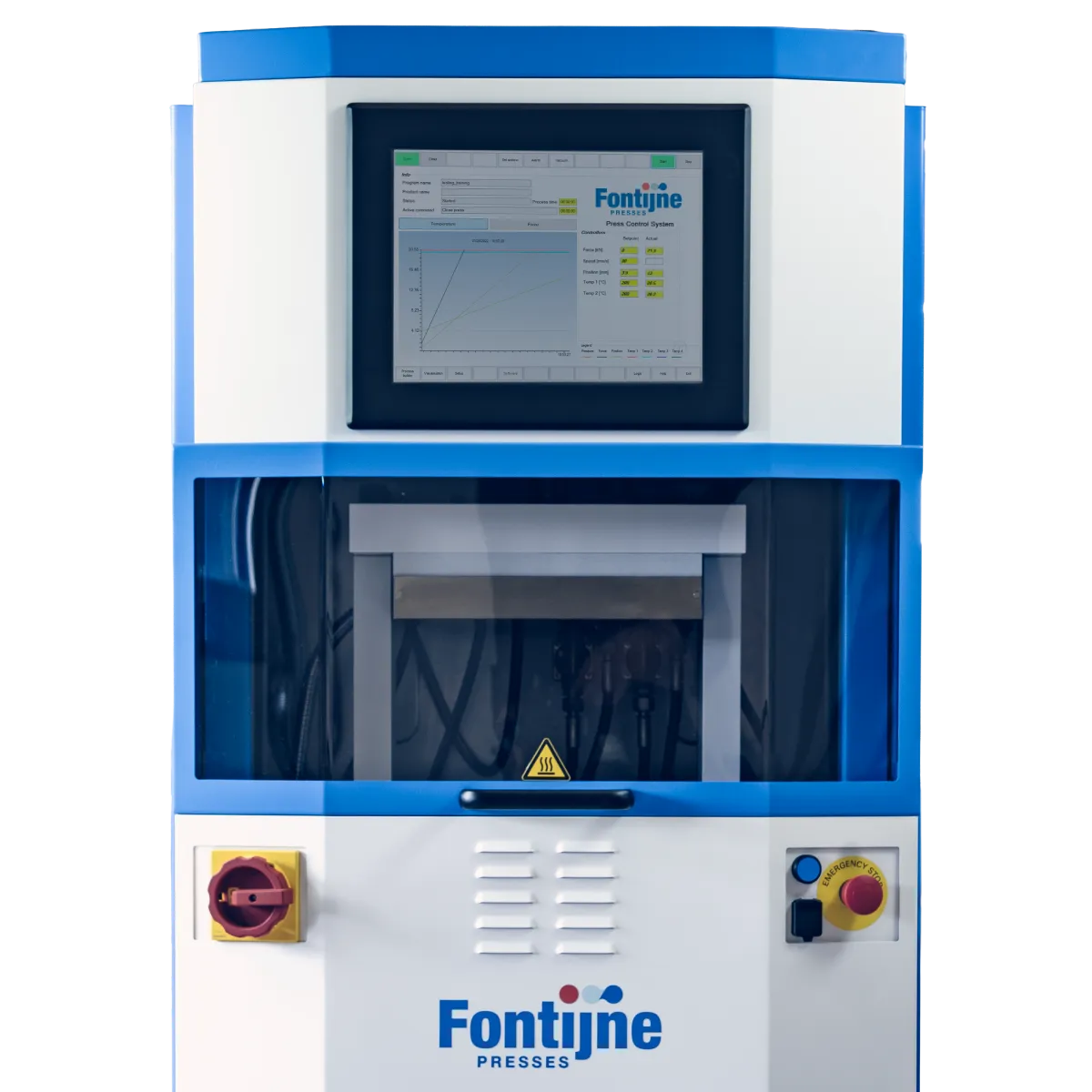
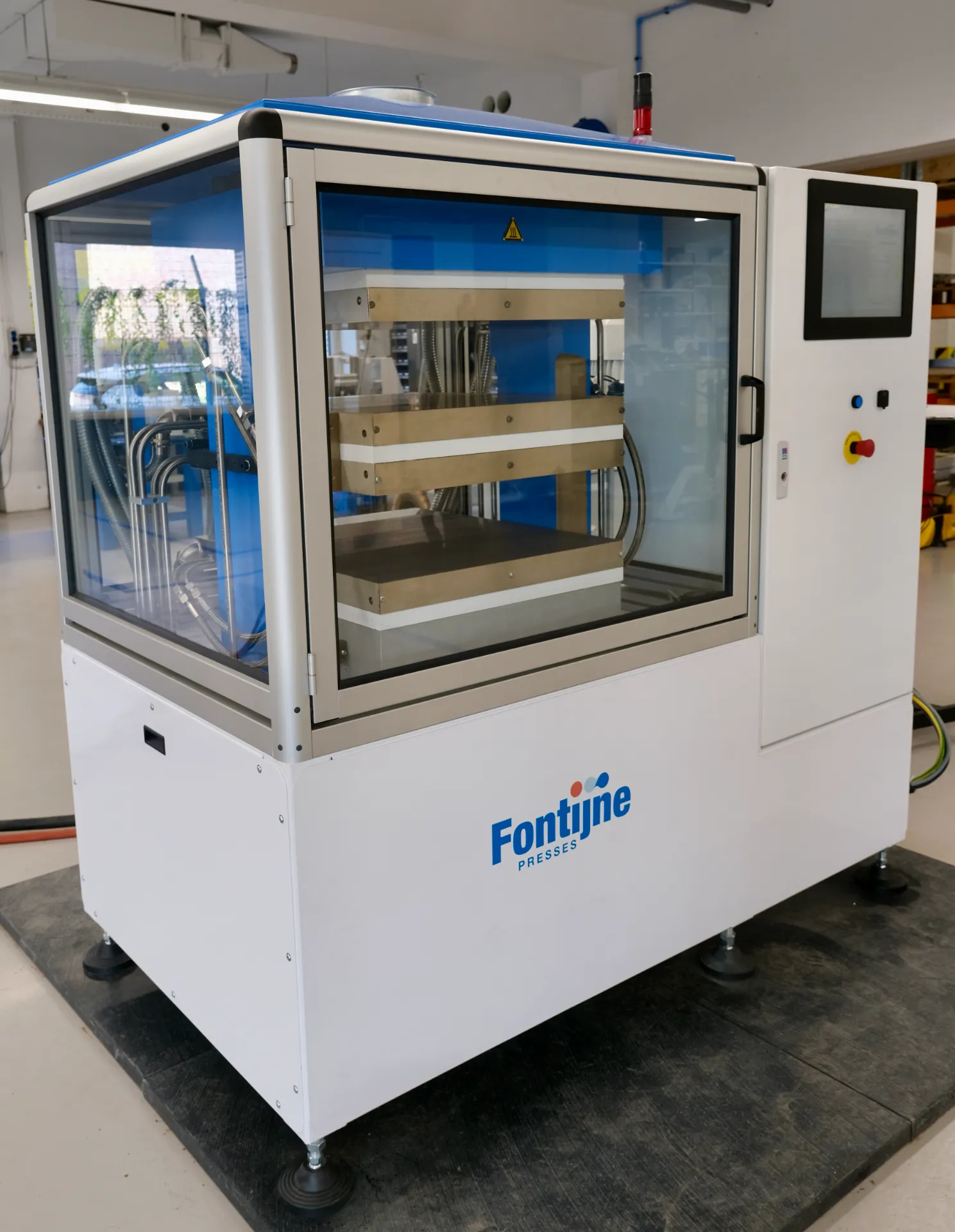

The option enables the position and movement speed of the lower platen to be programmed in ProView and combined with closing-force, temperature and time settings. Programmed positions are reached with an accuracy of ±0.1 mm, calibrated at 200°C.
Are you interested to know how you can benefit from this?
Reach out to our specialists.
When is position control relevant?
In a conventional force-controlled cycle, the press closes until the specified force is reached.
Fontijne Presses laboratory presses have an upstroke design. The material is placed on the lower platen, which moves upwards to close the press and downwards to open it.
New position commands in ProView
When the option is selected, commands such as the following are included in the ProView control system:
- Set position to X mm
- Change position with X mm
- Set position to X mm with a speed of Y mm/s
- Set nearly closed position to X mm
Compared with the current ProView workflow, this is a clear benefit: the operator can define these movement stages in the recipe instead of manually adjusting the press during each cycle.
The following three examples show how these commands can be used in a press recipe.
Example 1: Gentle closing
Some processes require a controlled initial approach before the full pressing force is applied.
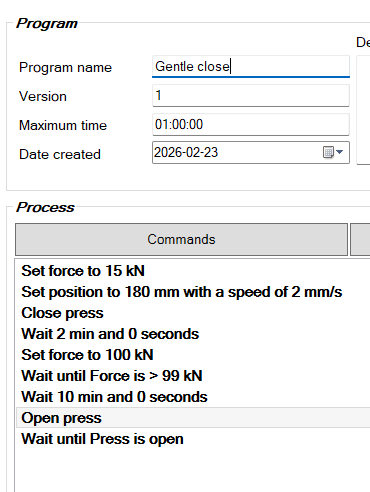
In this ProView example, the platen moves towards 180 mm at 2 mm/s with an initial force limit of 15 kN. After a two-minute waiting period, the force increases to 100 kN and is maintained for ten minutes.
This creates a repeatable two-stage process: controlled initial closing followed by pressing at the required final force.
Example 2: Slow opening
The release stage can also be programmed.
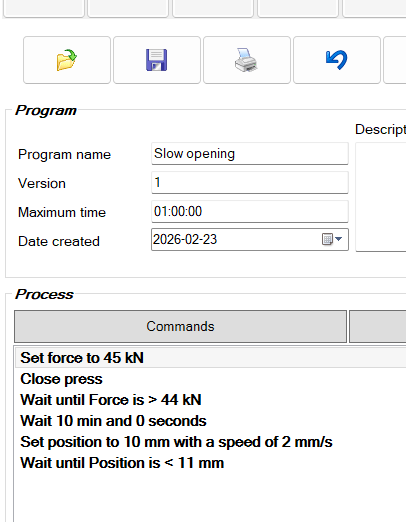
In this example, the material is pressed at 45 kN for ten minutes. The platen then moves towards a position of 10 mm at 2 mm/s.
This allows the initial opening movement to take place at a defined speed rather than opening the press immediately in one standard movement.
Example 3: Pressing to a certain thickness
Or you can press up to a certain thickness with a certain closing force and in a next step up to the final thickness with a higher closing force:
- Set force to X kN
- Close press
- Wait until position is > Y1 mm
- Set force to Z kN
- Wait until position is < Y2 mm
Discuss your press cycle with our specialists
Do you need more control over closing speed, platen position or force transitions?