
In scientific and industrial laboratories, the quality of sample preparation is crucial to the accuracy of subsequent testing and research. A laboratory press plays a pivotal role in shaping, moulding, and conditioning materials before analysis. Selecting the right press is not simply a matter of budget; it involves assessing the required closing force, temperature, level of automation, and specific application needs.
Fontijne Presses has been a leading name in laboratory platen press technology for decades. Apart from quality control and R&D support in the rubber, polymer, (bio)composite and fuel cell industries, these presses are also widely used to prepare samples in wood, plywood, textiles, ceramics, laminating/bonding (credit cards, ID cards), silicones, hot-embossing, thermoplastic elastomers, etc. Furthermore, Fontijne Presses is a familiar name in universities, high schools and institutes where the presses are used for educational and research purposes.
Our product range – comprising the LabManual, LabTop, LabEcon, LabVac, and LabPro series – caters to varied laboratory requirements, from manual control to fully customised, high-precision systems.
Discover the full range of Fontijne Presses products and specifications on this overview page.
Overview of the Fontijne Presses Series

LabManual Series
The LabManual series offers manually operated presses, providing closing forces up to 300 kN and temperatures up to 300 °C. This series is robust, cost-effective, and ideal for quality control environments or laboratories with modest throughput requirements.
Its compact footprint and straightforward controls make it particularly suited to laboratories where ease of use and reliability are the primary considerations.
LabTop Series
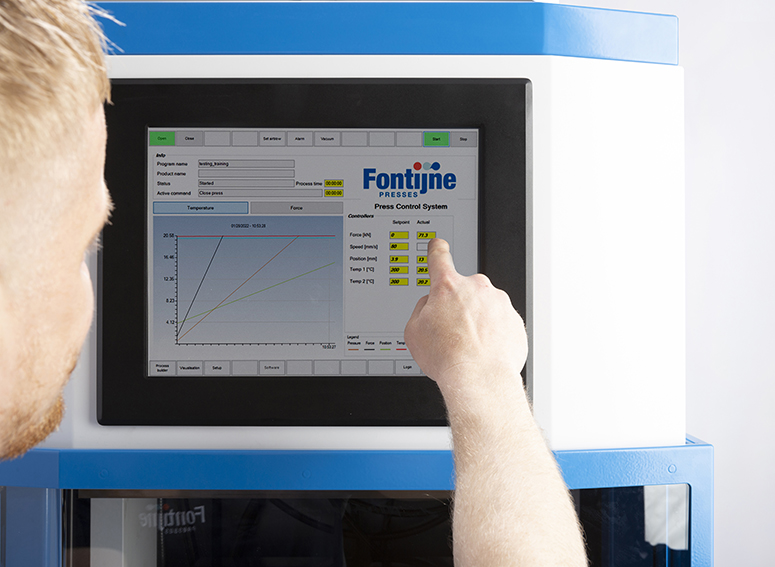
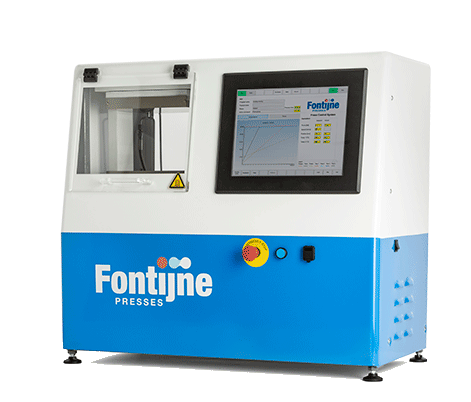
For laboratories that require automation but have limited space, the LabTop series delivers compact, automated benchtop presses with maximum closing forces of 150 kN or 300 kN. Equipped with the ProView touchscreen control system, these presses enable precise programming of pressing cycles, ensuring repeatable results.
This series bridges the gap between manual operation and full-scale industrial pressing, making it ideal for mid-volume applications.
Interested in a product demonstration?
Arrange a product demonstration to see the series in action and to determine which could best meet your laboratory’s needs.
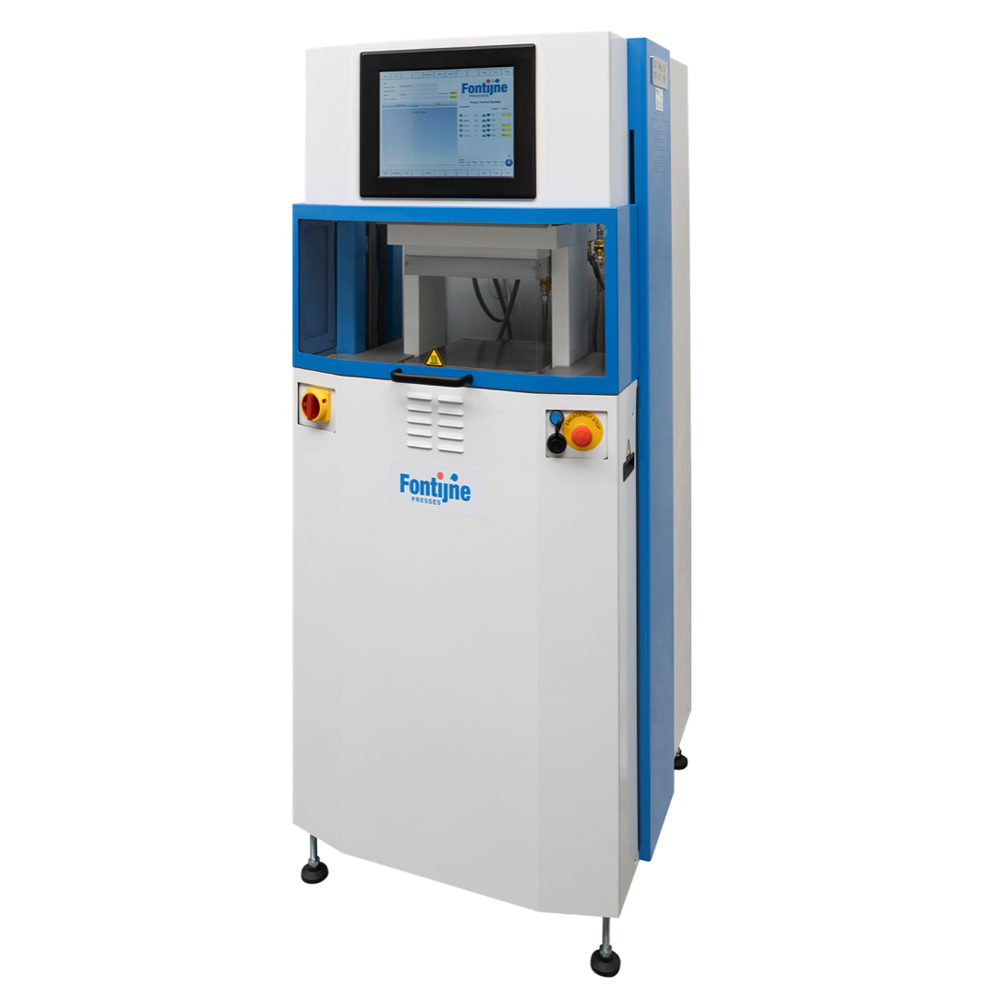
LabEcon Series
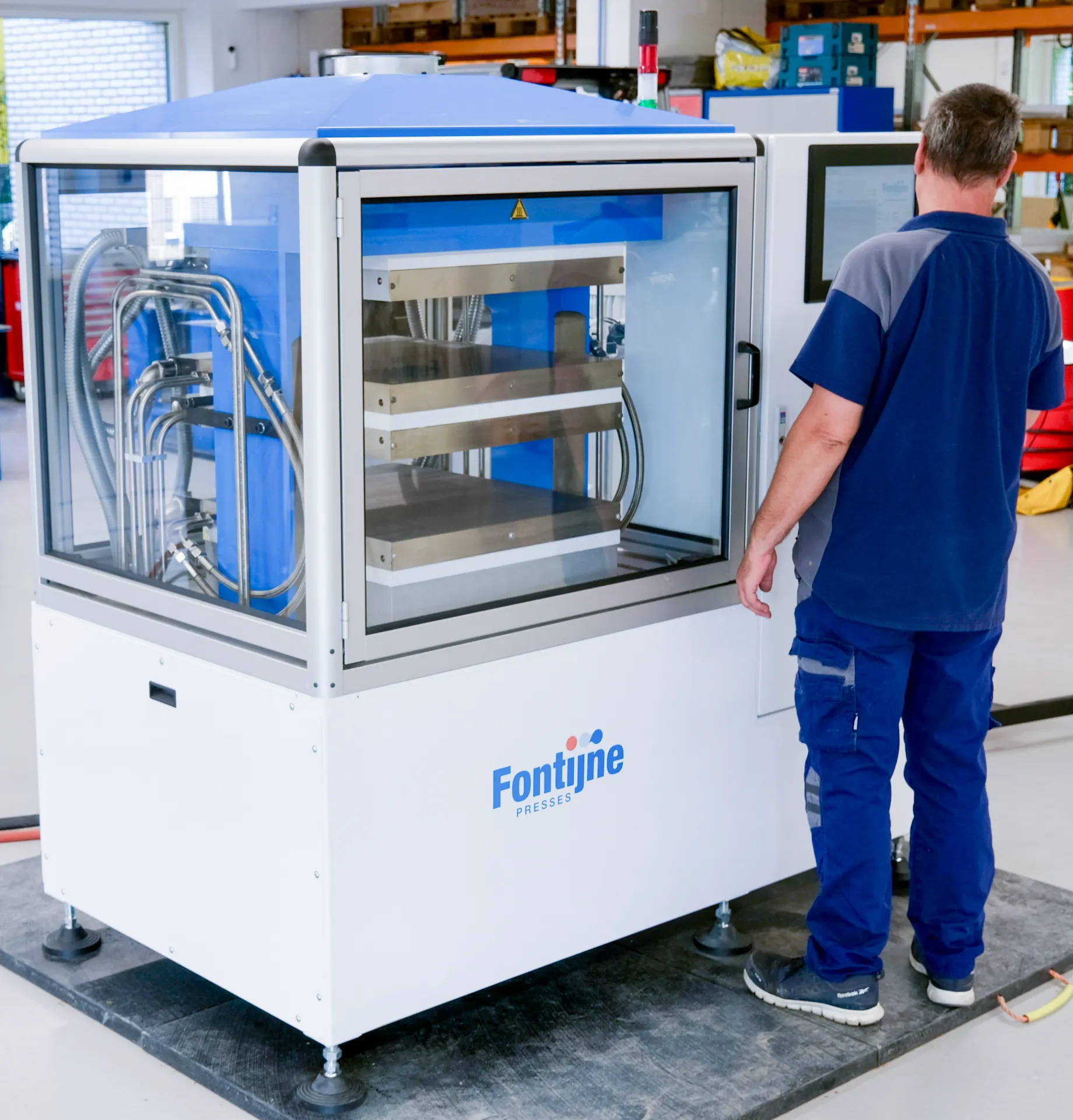
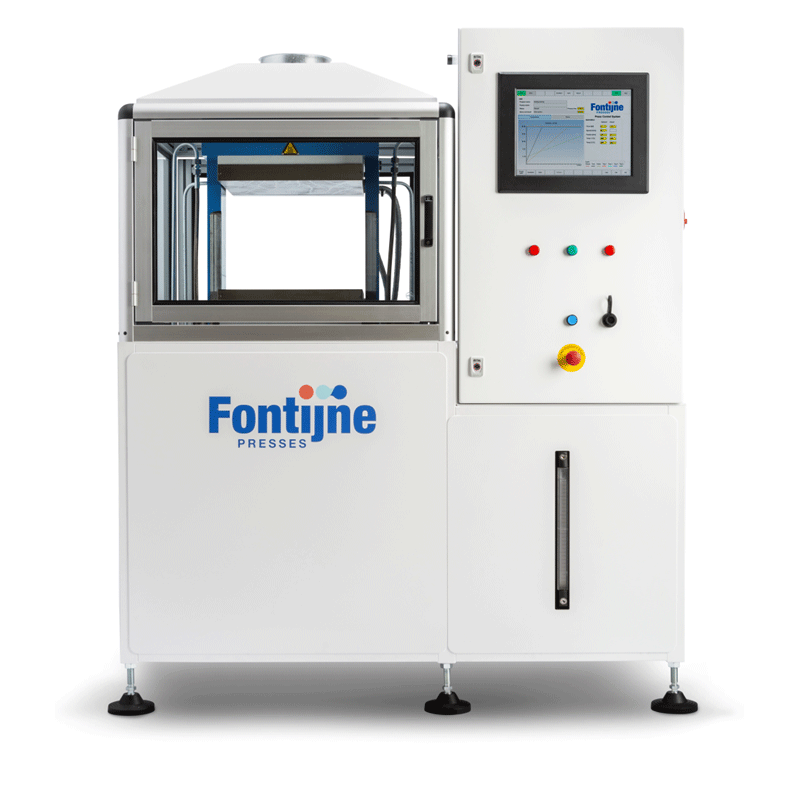
The LabEcon series comprises floor-standing automated presses with pressing capacities of 300, 600, or 1000 kN. These models are engineered for accuracy and repeatability, offering features such as rapid heating and cooling, advanced safety systems, and the user-friendly ProView interface.
The LabEcon is particularly suited to production-scale sample preparation or demanding R&D environments that require consistent results across high volumes.

LabVac Series
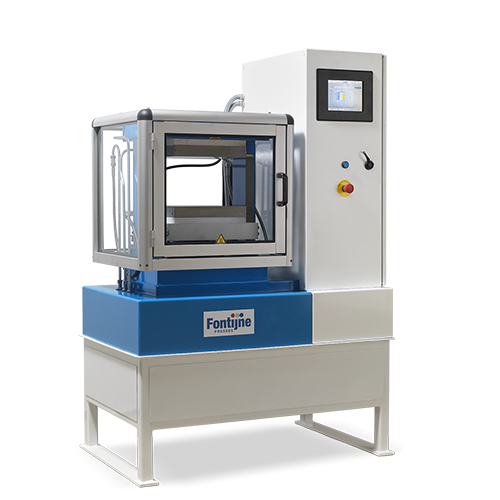
For materials sensitive to oxidation or atmospheric contamination, the most recent launched LabVac series adds vacuum capability to the pressing process. By operating at vacuum levels of 30–40 mbar, these presses significantly reduce oxidation, improve bonding, and enhance curing.
With closing force capacities ranging from 50 kN to 1000 kN, the LabVac is well-suited to advanced material research, including aerospace composites, medical polymers, and speciality elastomers.
LabPro Series
At the top of the range, the LabPro series offers fully customised presses with capacities of up to 5000 kN and temperature capabilities of up to 700 °C.
This series is ideal for pushing the boundaries of research and development and the most demanding pressing applications built to customer specifications.
Comparative overview
The following table summarises the core differences between the Fontijne Presses series:
| Series | Operation type | Force range | Max temp. | Control system | Key features |
|---|---|---|---|---|---|
| LabManual | Manual benchtop | Up to 300 kN | 300 °C | Manual LCD | Compact, reliable, cost-effective, 230V connection |
| LabTop | Automated benchtop | 150–300 kN | 300 °C | ProView touchscreen | Compact, programmable cycles, 230V connection |
| LabEcon | Automated floor-standing | 300–1000 kN | 400 °C | ProView touchscreen | High throughput, rapid heating/cooling, small footprint |
| LabVac | Automated with vacuum | 50–1000 kN | 300 °C | ProView touchscreen | Vacuum pressing, oxidation prevention |
| LabPro | Fully customised | Up to 5000 kN | 700 °C | ProView touchscreen | Extreme precision, high temperature, full custom |
Matching the press to the laboratory’s needs
For cost-conscious, low-volume applications
The LabManual series is a dependable choice for laboratories where cost efficiency and ease of use are the main priorities. With manual operation, it is straightforward to maintain, making it particularly attractive for educational institutions and quality control labs.
For automation in a compact press
The LabTop series provides the benefits of automation in a benchtop form factor, ideal for laboratories seeking improved process control without expanding their workspace.
For higher throughput and consistency
The LabEcon series is the logical choice for laboratories and production facilities that need consistent, high-volume pressing with rapid cycle times.
For sensitive materials
The LabVac series excels in applications involving materials prone to oxidation, moisture absorption, or contamination, enabling superior sample integrity.
For bespoke, high-precision requirements
The LabPro series is the ultimate solution for highly specific, demanding applications, offering exceptional precision, extreme temperature capabilities, and fully customisable configurations.
Additional considerations before purchase
When choosing a laboratory press, laboratories should also evaluate:
- Safety compliance – Including CE certification, safety shields, and emergency stop functions.
- Data management capabilities – Particularly recipe storage, process logging, and data export on automated models.
- Maintenance and service – Including preventive maintenance programmes, spare parts availability, and technical support.
- Standards compliance – Such as EN ISO 293 (Plastics — Compression moulding of test specimens of thermoplastic materials), EN ISO 17855 (Plastics — Polyethylene (PE) moulding and extrusion materials), ASTM D4703 (Standard Practice for Compression Molding Thermoplastic Materials into Test Specimens, Plaques, or Sheets) or ASTM D3182 (Standard Practice for Rubber—Materials, Equipment, and Procedures for Mixing Standard Compounds and Preparing Standard Vulcanized Sheets).
- Energy consumption – The hydraulic presses are equipped with high-capacity heating elements that enable rapid thermal heating, optimizing cycle times while minimizing energy input. The integration of an advanced hydraulic control system eliminates the need for active cooling of the hydraulics, further enhancing overall energy efficiency and reducing operational overhead.
Conclusion
Choosing the right laboratory press is a strategic decision that directly affects the quality, repeatability, and efficiency of laboratory operations. By considering factors such as throughput, temperature requirements, material sensitivity, and the desired level of automation, laboratories can select a model that delivers optimal performance for their specific application.
With the LabManual, LabTop, LabEcon, LabVac, and LabPro series, Fontijne Presses offers a comprehensive portfolio that covers every need—from simple manual presses to fully customised, high-capacity systems. Whether you are preparing polymer test specimens, conducting composite material research, or developing next-generation materials, there is a Fontijne Press laboratory press designed to meet your requirements.